march
//mɑːrtʃ//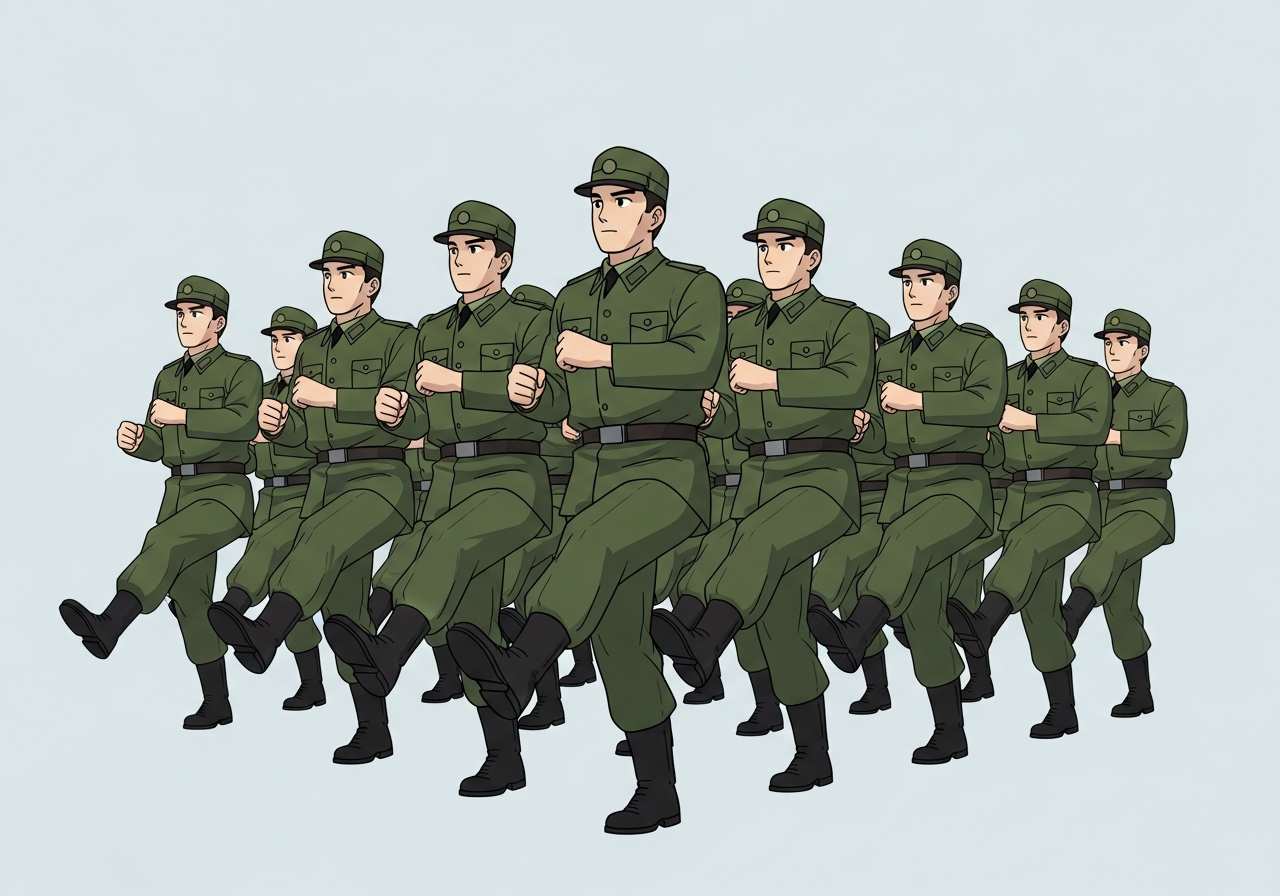
Verb
To walk with regular, measured steps in a steady rhythm, especially in a group with others keeping the same pace
The soldiers marched in formation across the parade ground.
To walk in a determined or purposeful manner, often showing anger or resolve
She marched into the office and demanded to speak to the manager.
To force someone to walk somewhere, especially by holding or pushing them
The police marched the suspect into the station.
To participate in an organized procession as a form of protest or demonstration
Thousands of people marched through the city to protest against climate change.
Noun
An act of marching; a steady, rhythmic walk, especially by soldiers or in a group
The soldiers began their march at dawn.
An organized procession of people walking together to express their views or protest about something
Thousands of people joined the march for climate action.
A piece of music with a strong regular rhythm, written to accompany marching
The band played a military march during the parade.
The distance covered or time taken in marching
It was a march of three days to reach the border.
Steady forward movement or progress
The march of technology has changed our daily lives.
proper noun
The third month of the year, between February and April, having 31 days
My birthday is in March.